Showing posts with label Japanese. Show all posts

Spicy Show and Tell

I’m so excited, and I just can’t hide it!  My Spice House package just came!  I’ve been ordering from them for a few years now and remain nothing but impressed.  Not only is the product always incredibly fresh, but it is also perfectly packaged every single time.  The result is pristine looking herbs and spices that look as if I picked them myself (I wish).


I usually place my order based on the things I consider necessities and then add in a few new items I’d like to try.  Here’s what I received today:

WANT TO TRY
Greektown “Billygoat” Seasoning.  I make my own gyros and tzatziki sauce and adore roast lamb, so purchasing this new-to-me Greek salt blend was a no-brainer.  (Ingredients: coarse flake salt, granulated garlic powder, Tellicherry black pepper, onion powder, Greek fancy oregano and powdered lemon peel)


SHOULD HAVE
I’ve been considering buying this Italian blend for some time and, now that I frequently make my own spaghetti sauce, I decided it was time.  I grow my own oregano, basil and rosemary and just bought thyme, but this mouth-watering mix contains marjoram too - all in a perfectly proportioned package.

The garlic and poppy seeds are destined to adorn my ArtisanBread in Five Minutes a Day everything bagels!  Oh, and the caraway seeds are for my Artisan Bread rye bread dough already prepped and ready in the fridge.  (Mmmmm…Reubens!)  

     
MUST HAVE
I rarely make a dish that doesn’t use one of these decadent duos: coriander and cumin or thyme and sage.  The chili powder too is an absolute necessity (shhh…it’s a secret ingredient in my award winning chili.)

 
NEED TO HAVE
I would never have learned about my two new obsessions if it weren’t for The Spice House.  One is the delicious in a Bloody Mary, hot to trot Vulcan's Fire Salt – a House exclusive (As we speak, I’m enjoying a bowl of vegetable soup with a little sprinkle of His Habañero Highness).  The other - Korean Black garlic – I would never had tried if it weren’t for their tasty description.  I am a garlic lover but was surprised by the rich, nutty flavor of this aged and fermented version.  It’s delicious in chicken soup but even better added to Japanese ramen broth (I prefer the fresh noodle version, bar none). 


Now that my spice drawer (yes, I have an entire drawer dedicated to the savory stuff – less the saffron which lives in a vacuum packed pouch in the freezer) is happy, so am I.  My only trouble is deciding which one to use first!

Inconvenient Convenience


Am I a snob? I didn’t think so, but I was recently called one because I turned my nose up at “Convenience Foods” - especially Hamburger Helper. Helper? Really? More like enabler.

This goes back to a previous post – Butter’s Better – in which I talk about my disdain for "ready to eat" foods with bewildering ingredient lists, gargantuan amounts of fillers and sodium, and a frightening array of additives and preservatives (not to mention excess packaging that makes for one FULL trash can). I am NOT saying these things (canned soup, frozen dinners, boxed rice and pasta dishes, and more) are not tasty, and I am NOT saying I haven’t – at one time or another – purchased some of them, but they are simply NOT something I typically choose to eat or to feed my family.


No, I don’t exclusively cook from scratch and I don’t shun ALL convenience items (for instance, I don’t bake my own crackers and bread or make my own taco shells, pasta, ketchup and cheese and Trader Joe's does make a mean Organic Tomato & Roasted Red Pepper Soup), but I suggest it is possible to easily (and cheaply!) feed people delicious and nutritious meals without opening a cardboard box every. single. night. A peek inside my pantry and fridge/freezer will show a few of my favorite sneaky short-cuts - items I consider to be convenient.

-Canned beans (white, black, kidney, garbanzo)
-Uncle Bens converted rice (rarely use it, but some dishes call for it. I sure as heck would never admit this to my old Japanese Grandmother – if I had one.)
-Cake mixes (if they are good enough for Alton Brown, they are good enough for me)
-Sandwich meats (for school lunches)
-Salad dressing and mayonnaise (I make a vinaigrette from time to time but there are some really good pre-made dressings out there.)
-Krusteaz pancake mix (yes, I can do pancakes from scratch but sometimes the mix is, well, so convenient)
-Spam (but I’ve talked about my affinity for this salty pink canned meat before – I buy the lower fat, lower sodium “light” version - for what it’s worth).


Yes, this method of cooking is a learned skill. In my early years when I couldn’t cook, didn’t have enough time, and thought convenience foods really were that much easier, I was a Chef Boyardee, Stove Top Stuffing, Chunky Soup, Shake 'n Bake, Minute Rice type of girl.  But I’ve changed. Slowly but surely, over the years, I’ve become…a snob.

A quick, easy, cheap, not-from-a-box recipe example that I happen to be making for dinner:

Chicken Teriyaki "Assistant"
Stir-fry ingredients:
  1 lb boneless chicken thighs, cut into bite-sized pieces
  1 lb broccoli, cut into florets
  2 T cooking oil (less if using non-stick skillet)
Sauce ingredients:
  1 T sugar
  2 T mirin
  2 T sake
  3 T soy sauce
  1 T corn starch

1. Whisk together sauce ingredients and set aside.
2. Heat cooking oil in large skillet or wok over med/high heat.
3. Add chicken pieces and sauté until mostly cooked (3-4 minutes).
4. Add broccoli and continue cooking until bright green and tender (3-4 minutes).
5. Add sauce mixture and continue cooking until sauce is bubbly and begins to thicken (2-3 minutes).
6. Serve over steamed white or brown rice and enjoy. (Serves four)

Butter’s Better post: http://agoodcooker.blogspot.com/2010/02/butters-better.html

My Mecca

No longer living in Japan and now unable to access many of the items I became used to purchasing left me wanting for a good Japanese grocery. Many Asian markets do carry a few of the specialty snacks and ingredients I like, but more often than not, good quality Japanese items were few and far between. In Virginia Beach I found – with the help of my nihonjin neighbor – a fabulous little place called Ichiban (“number one”) that carried Japanese products only. The store was very small but exceptionally clean and well organized – the products never looked like they actually traveled half-way around the world to get to the shelves. However, I’ve since moved and really miss my ready source for wakame, dashi, shichimi, shiromiso, konbu, unagi, mugicha…


Missed, I should say, until another wonderful friend pointed me in the direction of Uwajimaya in Seattle. I nary waited a full day before jumping in my Jeep and heading out with visions of umeboshi dancing in my head.

While there is a blend of other Asian and South-east Asian (and even American) cuisine found throughout the aisles, the majority of the items are from the Land of the Rising Sun. I was thrilled to find a huge store, bakery, and foodcourt - almost a mall - packed with an amazing array of recipe ingredients, snacks and many goodies I had not seen since I left Nippon. Take a peek:


"Vanilla Cream Oreo Stick" (Yes, that's really what it says.  I can still read a little - well, enough to get by). This was one of the couple dozen flavors of ever popular Pocky-type snacks available.


Hello Kitty is Japan's Mickey Mouse, I dare say.  She is seen on toys, candy and snacks, rice cookers, space heaters, wine, lawn mowers (yes, lawn mowers) and even toilet paper and...uh, feminine products.


Canned coffee is everywhere in Japan.  There are literally hundreds of types - the best of which is Georgia brand by Coca-Cola (I miss it so...) and is not, to the best of my knowledge, sold in the USA.  It's almost worth a trip back to Japan - it's that darn good.  The same vending machines - located in absolutely every part of the country (we even saw one in the middle of nowhere next to a daikon field with no apparent power source) - spit out cold coffee (and tea) in the summer and perfectly heated stuff in the winter. 


Only the Japanese make wine-filled chocolate (3.3% alcohol) and wine ice cream this delicious...


Fresh, "real" wasabi, anyone?  Only $59.99 a pound.  It makes me wish I'd taken greater advantage of having it in my neighborhood grocery store when we lived in Japan.  


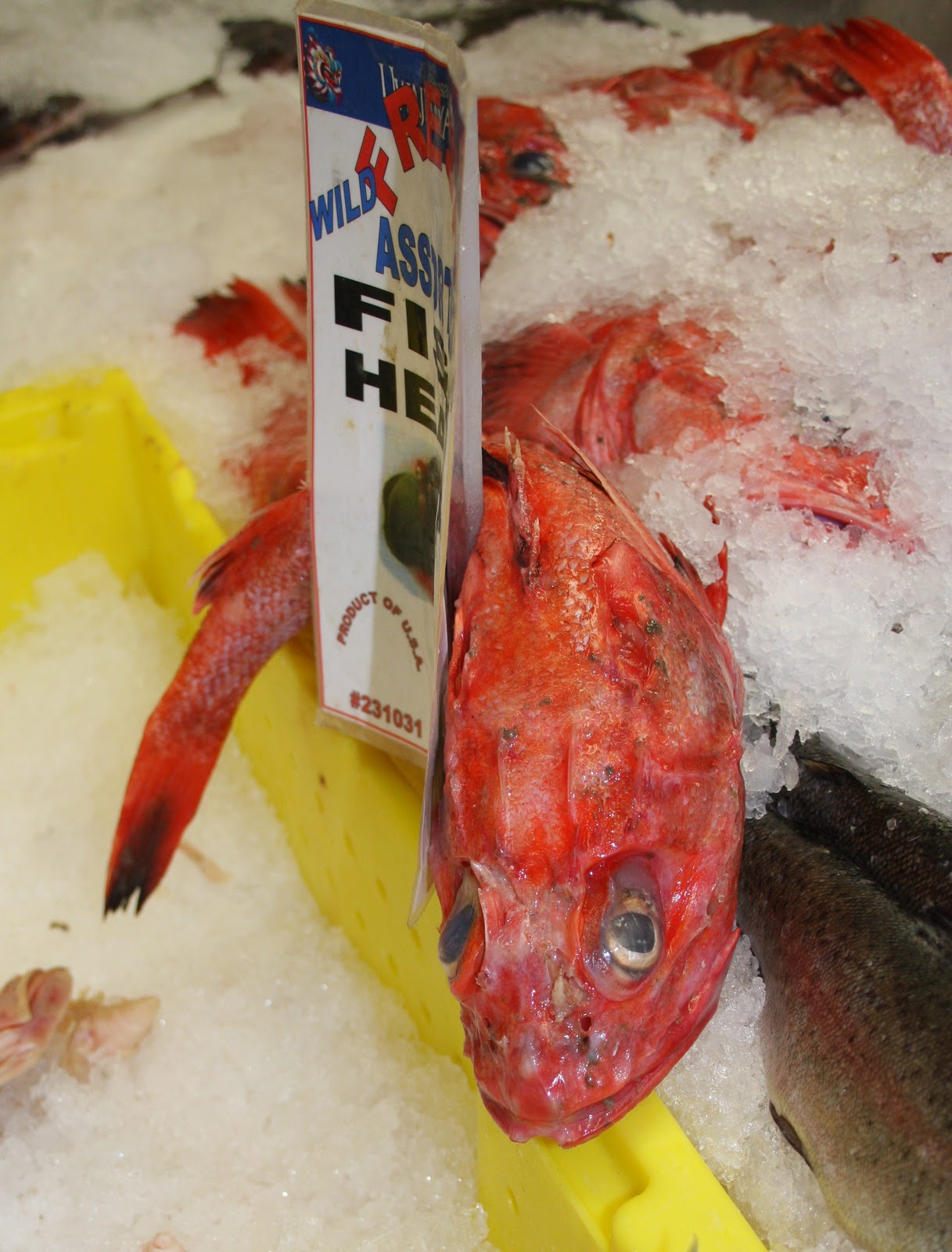
Fresh fish?  This one was VERY fresh - I think he winked at me.  Seriously though, they have fresh, in the shell sea urchin (uni), sashimi grade salmon (sake), tuna (maguro), and so much more. 


Not Japanese, but very close to what we saw in every corner bakery in Japan was the deliciousness that is Yummy House Bakery and Beard Papa's Cream Puffs (where they fill fresh baked pastry clouds with two flavors of custard while you wait).
 

All in all, it was a wonderful trip, and I can't wait to go back.  Now armed with all the ingredients I need to make shabu-shabu, yakisoba, sukiyaki - as well as many things I didn't really need, I'm excited to get cooking and eating and planning my next trip!  Stay tuned...

Uwajimaya: http://www.uwajimaya.com/

Pickles of another sort


Pickles by definition are vegetables and fruits - or in the case of pig’s feet, meat - preserved in a brine. (Not recommending or suggesting those - just mentioning). According to Cook’s Illustrated (Sept/Oct 1994 p. 18-19), brine usually consists of a vinegar based solution containing salt, sugar and other flavorings. The vinegar provides the acidity (ranging from 4 to 7.9% depending on the type) necessary to preserve the food of choice by hampering bacteria growth. Cook’s illustrated has an entire page of pickle plans including the more traditional cucumbers, pearl onions, okra and even turnips and fennel. I, however, am fond of making Japanese pickles known as Tsukemono.

My go-to guide for these is Easy Japanese Pickling in Five Minutes to One Day: 101 Full-Color Recipes for Authentic Tsukemono. This line of cookbooks is the best in my opinion. I have the easy Tsukemono, Japanese, Chinese, Thai, Vietnamese and Korean and use them all regularly. The directions are user friendly and simply laid out and the pictures really help pinpoint the correct ingredients when shopping in a somewhat confusing Asian grocery.

The Tsukemono book is unique in that it divides the recipes by seasonal availability. Japan, I learned while living there, has very specific seasons when it comes to fruits and vegetables – more so than here in the United States. Yes, on the rare occasion, one can find out of season produce (for a hefty price). Generally, though, fruits and veggies are only available for perhaps a month or two out of the year. For example, momo (peaches) are found July/August, kaki (persimmons) and nashi (Asian pear) are fall fruits, and mikan (mandarin oranges) are available in the early winter.

Cucumbers, bell peppers, green beans, and okra are among the recommended summer fare and are fortunately (and not coincidentally) widely available right now, so I decided to make some Japanese misozuke cucumbers and Korean zucchini namul.


Misozuke Cucumbers
2 cucumbers sliced into ¼ rounds
3/4C Miso (7 ounces by weight)
2T mirin

-Mix miso and mirin well
-Layer on plastic wrap 1/3 miso mixture, paper towel, ½ cucumber slices, paper towel, 1/3 miso, paper towel, ½ cucumbers, paper towel, 1/3 miso
-Wrap tightly with more plastic wrap and let stand 2-6 hours

The recipe in the book actually calls for thin sliced sticks of celery - not cucumbers - but this style of cooking lends itself nicely to mix and match. It would probably be good with any firm veggie like carrots or zucchini. Speaking of zucchini, I made one of my favorite Korean vegetable “side-dishes” (namul) last night with two medium sized zucchini.

Zucchini Namul
2 medium or 4 small zucchini (about a pound)
1/2t garlic powder (can be made with fresh, but I prefer powder for this dish)
1t sugar
3T soy sauce

2T toasted sesame oil

-Slice each squash in half lengthwise, then into cut into 1/4-inch thick half-circles.
-Bring a saucepan of water to a boil, add the squash, return to a boil and let cook for 1 minute. Drain and rinse with cold water. Drain again.
-Whisk together the remaining ingredients in a large bowl.
-Add the squash and toss to coat well.

-Let set for 30 minutes to an hour, tossing ocassionally, and serve at room temperature.

(Note – Keep sesame oil in the refrigerator to preserve flavor and prevent it from getting rancid)

Fish is Fishy

Tomorrow is Friday; for Catholics everywhere, this means substituting fish for the regularly scheduled meatloaf meal.  However, there are so many questions regarding this particular protein choice nowadays.  Is it sustainable?  Is is wild or farm raised?   Does it contain toxins such as mercury?  Is it what it really says in the wrapper?  Is it fresh?  How do I cook it without ruining it?!  (Psst...see my Parchment paper - not just for the Magna Carta post for a great method)


Confused?  Me too.  Good thing there other suitable protein choices for Fishy Fridays (and any day, really) that need little if any pondering.  

For reference, the Recommended Dietary Allowances (RDA) of protein for an average, healthy adult is in the neighborhood of 50 grams a day.  This can be gained by eating chicken breast (4oz = 34g) and steak (4oz = 32g) or, for Fishy Fridays, cod (4oz = 26g), salmon (4oz = 30g) and tuna (4oz = 34).  However, for a twist on the main dish, how about lentils (1cup = 18g), yogurt (1cup = 13g), peanut butter (1/4cup = 16g), navy beans (1cup = 16g), or edamame (1 cup = 29g).
 
Eda-what, you say?  Edamame are young, green soybeans.  This Asian favorite (served with icy cold mugs of beer as a bar snack in Japan) is now readily available in the frozen food aisles throughout the US and is delicious eaten straight up or served in a stir fry or salad.  Grab a bag next time you are in the store, drop in lightly salted boiling water for 3-5 minutes (depending on your taste), drain, sprinkle with a bit of kosher salt and eat hot or cold. 

Tonight for dinner, my family and I dined on edamame and miso soup made with tofu, wakame (seaweed), and nameko mushrooms.  I estimate we each had 40 grams of muscle building, tissue healing protein between these two nutritious dishes - and they were delicious. (miso paste = 4g per 1oz serving and tofu = 9g per 4oz serving) 

Miso Soup
1 14oz cake tofu (cut into 1/2 inch cubes)
1/3 oz dried wakame
1 scallion (chopped)
4 cups dashi
4oz red miso

Place dashi in pot, bring to a boil.  Soften miso by adding small amount of hot dashi and add to pot.  Add tofu and wakame and boil briefly until wakame unfurls.  Top with chopped scallions and serve (feeds 4)

If you still want fish - and I do - here are a few "good" choices from both a health and environmenal standpoint: wild-caught Pacific salmon, herring, pollock, sardines and cod. 

Check out this Sustainable Seafood Guide from the Virginia Aquarium: www.virginiaaquarium.com/research-conservation/pages/sensible-seafood.aspx  

(Thanks to www.whfoods.com/ for the protein and fish info.)      

Oh! My Aching Rice Cooker!

Last night for dinner we had Korean and the night before - Japanese. Tonight… Japanese again. But wait…I am getting ahead of myself. First, I’d like to introduce you to my rice cooker. Twenty-one years ago, I lived in Hawaii next door to the best Thai cook I’ve ever met. Anne made foods for me I’d never dreamed existed let alone ever eaten – foods I now list among my absolute favorites: kimchi, som tum (green papaya salad), tom yung goong (hot, sour shrimp soup) and more. And, I often reciprocated. In fact, we started sharing a plate of our respective dinners with each other almost every night. (She told people I was the best “American food” maker she’d ever known.)

One afternoon, when we were cooking together (she taught me volumes about Thai food and cuisine in general), she asked me how I made rice. Like the typical mid-westerner, I told her with a shrug, “In a pan.” My otherwise soft-spoken, mild-mannered neighbor suddenly smacked her hand on the counter and admonished, “No, no! That will never do!” She proceeded to explain why I needed an electric rice cooker as well as how to use it and how to take care of it. Shortly after that, I became the proud owner of a ten-cup Tiger rice cooker. I remember buying it because it was probably the most expensive thing I’d ever purchased – it was nearly $100 even back then. As with time, I most regrettably lost touch with Anne, but I still have my rice cooker…and it still steams like a champ.

So, this is what I’ve cooked the last few nights with the help of my overworked, aged but still kicking rice cooker.


The first night on this most recent Asian food kick I made rice and Oyaku Donburi (a Japanese chicken and egg dish served over rice) from a recipe in my Quick & Easy Japanese Cuisine for Everyone cookbook (available from amazon.com along with Quick & Easy Thai that I love so much most of the pages are falling out).

On Korean night, I made rice in my rice cooker, Daeji Bulgogi (spicy pork which technically I only cooked, as I bought the raw, marinated meat at my favorite Korean grocery) and Miyuk Gook. Also known as “birthday soup,” this highly nutritious seaweed soup flavored with sesame oil (which I most recently learned should be kept in the fridge once opened for optimum flavor) is served at birthday meals and - I was surprised to learn - to new mothers after childbirth.


Tonight I made curry. When asked about Japanese food, most minds probably picture sushi. However, I can attest to the fact that curry is way more popular in Japan than sushi. (Sometime I’ll tell you about the curry doughnut I ate there.) It is the ultimate Japanese comfort food. While some people make the curry sauce from scratch, many use the prepared sauce blocks that look akin to chunks of peanut butter fudge. I have the powder but rarely ever open the can - the paste blocks are just too convenient. I am partial to the mix made by S&B Foods although House Curry (called Vermont Curry in the states) is also delicious. All are available in mild, medium and hot variations. (Neat story and cooking information about curry at this link: http://www.sbfoods.co.jp/eng/currystory.html )

There are three primary ways to eat this Japanese variation of the Indian favorite: with dipping bread, over udon (a thick wheat-flour noodle) – boy, did I burn my lip eating this once – and alongside perfectly prepared rice (and not Minute Rice, Uncle Ben's, jasmine, or basmati – don’t even try to convince a Japanese person these deserve to wear the name “rice”). I made my curry rice with leftover roast beef, potatoes, onions and carrots just like it said on the box.  My kids were in heaven and there was barely enough for my husband’s lunch the next day.

I’ve decided, after three days in a row, to give the rice cooker a rest. Tomorrow night we are having sekihan using my bamboo rice steamer. I’ve already have the adzuki beans and sweet rice soaking.

Parchment paper - not just for the Magna Carta

I may have just entered into a whole new realm of cooking. I saw a minute of a cooking show yesterday featuring salmon fillets cooked in parchment paper and was intrigued as I tend to occasionally - albeit slightly - overcook fish. The theory is all the moisture stays inside the packet steaming the food.  I may have heard about this supposedly foolproof method for cooking fish before but never paid it any mind. Tonight I did.

Photo by Susan Wenzel 
I bought four nice wild-caught Pacific salmon fillets (only wild will do) and began to consider my options. The tv chef I watched had topped the salmon with salt, pepper, haricot vert (fancy talk for real skinny French green beans. Haricot is French for “bean” and vert is French for – you guessed it – “green”) and some other stuff. I had the beans in the freezer, and a couple of my own ideas.

I tore off four big pieces of parchment paper and coated each piece of salmon on both sides with about ½ T olive oil. I put one fillet per piece of paper and sprinkled on a little Fumee de Sel Chardonnay Oak Smoked Sea Salt (from The Spice House) and a few grinds of Tellicherry peppercorns (my new favorite). I topped each with about a dozen of the whole green beans and a few super thin round slices of sweet onion (done with my Benriner Japanese Mandolin Slicer ® that does an awesome job on fingers too – but that’s another story).


I folded together the middles of each parchment and twisted shut the ends then popped all four fillets in the oven on a cookie sheet at 400 degrees for 15 minutes.

The finished product was attractive, moist and, more importantly, delicious. I can only imagine the possibilities for parchment cooking. Probably almost any kind of fish (whole or fillet), shrimp, even scallops would work – and the topping choices would be endless – fresh or dried herbs, sundried tomatoes, roasted red peppers, lemon slices, garlic, capers, spicy mustard, chives, cilantro, lemon grass, Thai chilies...yum.

P.S. Check out this cool way to fold the parchment. (Although my method worked just as well.)  http://cookingfortwo.about.com/od/maindishes/ss/enpapillote.htm  

Did I mention cleanup is also a cinch?  I'm sold!


Lucky dish

On the way back to Virginia from Ohio I decided to stop by my favorite hometown meat market – Mom Wilson’s on US 23 outside Delaware, OH. I read out loud the small red road signs that had been there since my childhood as I drove the last miles to the store – Whole Hog, Country Sausage, Hickory Smoked Ham, Hickory Smoked Bacon, R Bologna, Pan Haas…


I pulled into the “Porkin’ Lot” and walked inside where I was greeted with the same old familiar smells: barrels of pickles, huge wheels of cheese, smoky meats and sauerkraut. The year was drawing to an end and I was there for the sauerkraut – a three pound bag of the stuff. Being of German decent, I grew up knowing eating kraut and pork on New Year’s Day was necessary to bring good fortune and prosperity in the upcoming year.

I don’t eat sauerkraut every year anymore, though. Now that I live in Virginia, I often uphold southern tradition and eat black-eyed peas and collard greens for good luck in the New Year. In fact, that is something I like to cook pretty much year-round – a pot of beans and a pot of greens. A little bit of country ham and a handful of dehydrated onions in each pot is all it takes for a perfectly nutritious and delicious meal the whole family will eat. 
Every culture, it seems, has a traditional New Year’s dish.


I had the pleasure of living in Japan for a few years where New Year’s (o-shogatsu) was one of the most celebrated holidays. On New Year’s Eve, we dined on soba; the long length of the noodles symbolizing longevity. New Year’s Day brought with it a wide variety of delicious treats – called osechi-ryori – each with its own meaning including fertility, prosperity, health and happiness. These artfully prepared foods are typically cooked in advance of New Year’s Day and are intended to be eaten throughout the first few days of the year. This ensures the whole family can visit and relax and not worry about preparing meals. O-zōni is a particular favorite of mine and my Japanese neighbor makes some for me every year. This mild New Year’s soup is made with dashi (fish stock), mochi (glutinous, sweet rice pounded into a paste and molded into small cakes), and vegetables including carrot, bamboo shoot, and daikon.

I am not sure which is the luckiest food, so I’ve decided to err on the side of caution and have a little bit of all the above!


(Photo from http://germanfoodguide.com/ and http://www.bento.com/ )